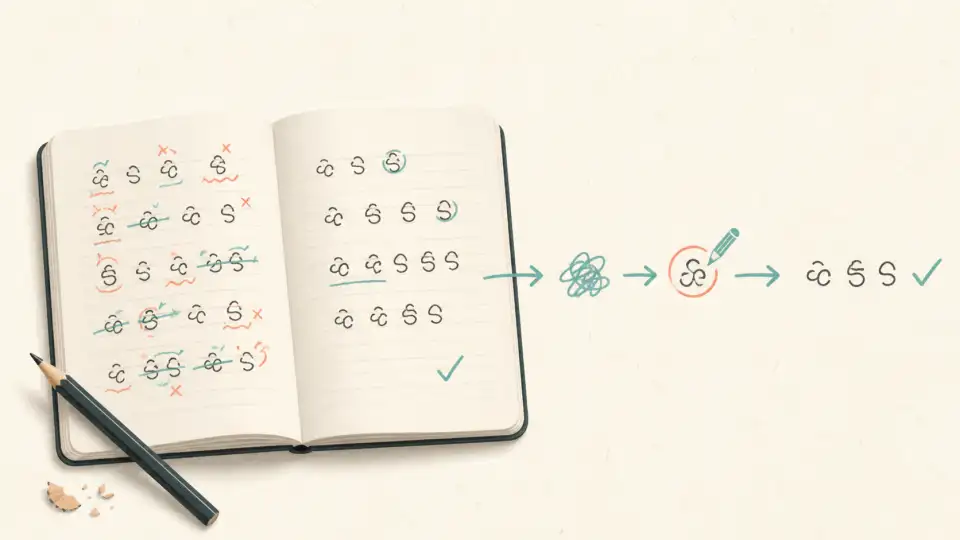
I used to think my Tamil was perfect. I grew up speaking it, scored high in school exams, and watch movies without subtitles. Then I sent a formal email to a client, and my editor friend pointed out three grammar mistakes in the subject line alone.
It hit me hard: Spoken Tamil and Written Tamil are effectively two different languages.
If you write exactly how you speak, you aren't just being "casual"—to a formal reader, you look uneducated.
The "Invisible" Errors You Make Every Day
When we speak, we slur words together. We skip conjunctions. We use "Spoken Sandhi" (joining words by sound) which is often grammatically illegal in writing.
1. The "Sandhi" Trap (சந்திப் பிழைகள்)
In speech, Tamil Amma sounds like one word. In writing?
- Wrong: தமிழ்அம்மா (Tamilamma)
- Correct: தமிழ்த்தாய் (Tamilththaai - wait, different word) or தமிழன்னை.
The rule of replacing soft consonants with hard ones when joining words (Vallinam Migum Idam) is almost impossible to "feel" just by listening. You strictly need to know the grammar rules—or use a tool that does.
2. Subject-Verb Disagreement
In casual chat, we often say "Avan vandhuttaan" (He came). But in formal writing, maintaining the strict Class-Gender-Number agreement ( திணை-பால்-எண்-இடம்) is crucial.
- Casual: சார் வந்துட்டார் (Sir vandhuttaar)
- Formal: ஐயா வருகை தந்தார் (Ayya varugai thandhaar)
Why "Google Translate" Won't Save You
I see this all the time. People type in English and use Google Translate.
It doesn't care if you missed a "Sandhi" letter. It doesn't care if your tone switches from respectful to rude in the middle of a paragraph.
The Solution: Use an Online Tamil Grammar Checker
You wouldn't send a business email in English without Grammarly, right? Why treat Tamil differently? An online Tamil grammar checker does what your brain skips:
- It scans for broken Sandhi rules.
- It highlights colloquialisms that shouldn't be in formal text.
- It fixes spelling errors contextually (identifying if you meant Palam or Balam).
Put Your Text to the Test
I built Sariya's grammar checker specifically to catch the "Spoken vs Written" errors that generic tools miss.
அவன் பள்ளிக்கு போனான்.
அவன் பள்ளிக்குச் சென்றான்.
Conclusion
Good grammar isn't just about following rules. It's about respect. Respect for the language, and respect for the person reading your text.
Don't let a missing 'க்' or a sloppy verb ending undermine your message.